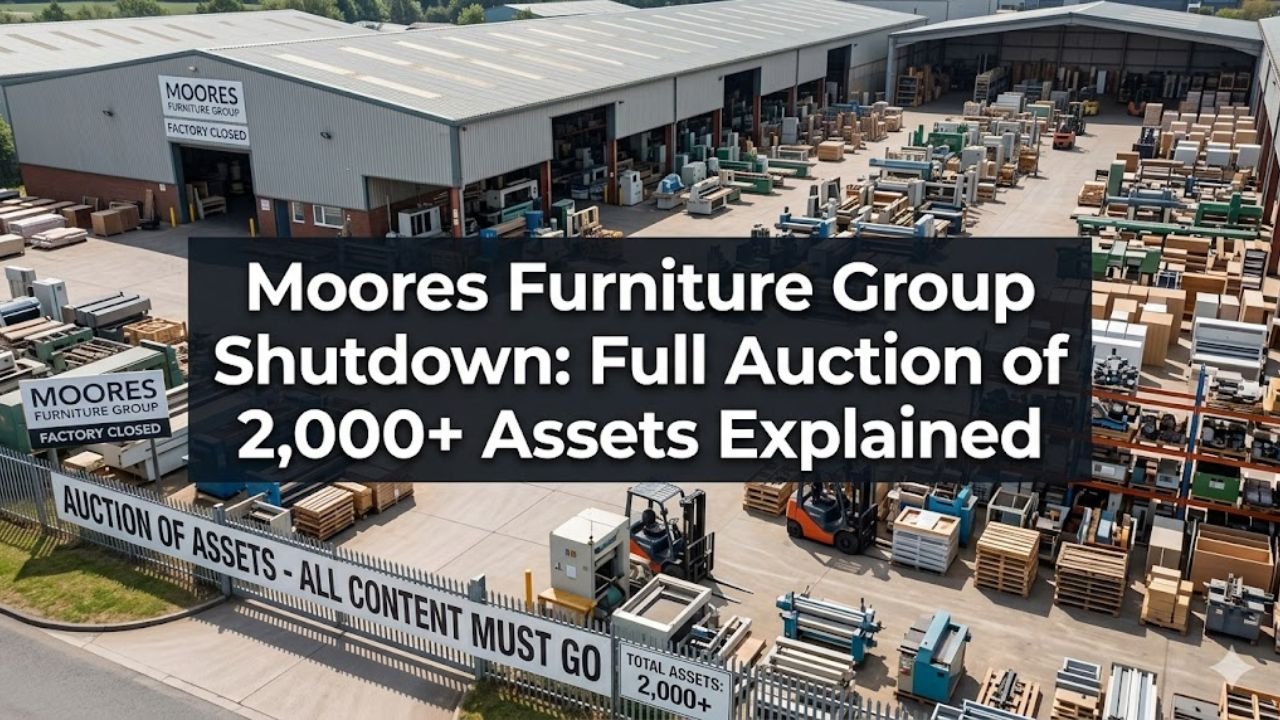
The start of 2026 saw a major restructuring in the UK manufacturing sector with the permanent closure of Moores Furniture Group. After 79 years of business, the kitchen behemoth based in Wetherby went to administration, leaving behind a legacy of craftsmanship and a sprawling 35-acre site in West Yorkshire. The factory’s intellectual property and customer database were protected in a pre-pack deal with Wren Kitchens. Now, the factory’s physical assets—machinery, logistics fleet, and industrial equipment—are set to be auctioned. This liquidation is the largest the woodworking industry has seen this decade, with over 2,000 lots available to builders, manufacturers, and enterprising individuals worldwide.
The Economic Reasons for Liquidation
The obstacles Moores Furniture Group faced were not spontaneous actions. There was a series of economic challenges. They did a management buyout in September 2023, but faced a major downturn in the UK house building industry. This sector was the main revenue stream. Energy costs were increasing, and one of the major clients went bankrupt resulting in a multi-million pound loss. The company had a big funding gap, and insolvency was the only option. The case was given to Interpath in January 2023. The construction supply chain is facing the same problems. No matter how long the heritage brand has been, they will face the problems of the market. The construction supply will face increased raw materials and fluctuating market demands.
Asset and Auction Logistics
After communication and coordination, Walker Singleton is the chosen auction company. The first step in auction coordination has already been completed. The auction is the first step in the large asset disposal process. The assets have been separated into six auctions. The inventory for these auctions is massive. The auction has the most up to date technology, and some of the most mundane. Professionals in the joinery or engineering industries will have the opportunity to buy.
| Asset Category | Estimated Lot Count | Primary Highlights |
| Woodworking Machinery | 450+ | CNC borers, beam saws, and edge banders |
| Engineering & Maintenance | 300+ | Workbenches, power tools, and lathes |
| Office & IT Infrastructure | 500+ | Computers, servers, and designer furniture |
| Logistics & Handling | 200+ | Forklifts, pallet trucks, and racking systems |
| Catering & Ancillary | 150+ | Commercial kitchen gear and appliances |
| Finished Stock & Components | 400+ | Kitchen units, doors, and hardware |
Strategic Opportunities for Small Businesses and Competitors
The closure of a large employer is a blow to the local Wetherby community. However, for smaller woodworking shops wishing to grow, the auction is a valuable opportunity. Auctions of this size often have large “forgotten” lots, such as high-end collection systems or large amounts of hardware, which sell at a steep discount. Additionally, because the site needs to be cleared for further development, there is a sense of urgency that often rewards the more prepared bidders. Industry insiders believe the site clearance approach for this auction allows bidders to focus on specific categories without the exhaustion that comes with a lengthy, single multi-day auction. This is a prime example of a circular economy, with the equipment of a woodworking behemoth being repurposed for the newest manufacturers to grow.
The Human Element and Heritage of the Wetherby Site
Moores Furniture Group has shut its door for the last time and it has lost the last remnants of its 76-year history. The business began with George Moore and 45 pounds in a second-hand chicken shed in 1947. Moore’s became the first company in the UK to introduce the ‘flat-pack’ and ‘fitted’ kitchen. As the auction approached, many of us walked through the factory, noting the remnants of its history in the plenty-of-years-old signs and the farewell messages the staff left on whiteboards. Wren has bought the company’s name, but the auction will strip the factory of its last elements. Closing the factory is equally a final closure on a chapter of British industrial history that many local families worked for eight decades as part of this heritage.
Wrapping Up Remarks for Interested Bidders and Industry Participants
Those planning to take part in the last phases of the auction must do thorough planning. Auctions allow for buyers to conduct their own professional reviews, but do them before the auction closes. This is crucial as everything is sold as is. It’s also important to remember the extra 20% of the total that buyers also must pay and the time constraints for removing equipment after the auction ends. The last auction items for Moores Furniture Group will be sold in April, and the company will take a new direction in its history, moving away from building homes and to selling construction equipment. This is a sad end to their legacy, but the equipment they sell will help construction workers for decades to come.
FAQs
Q1 When will Moores Furniture Group stop accepting bids?
Bidding for the auction is divided into phases, and the first phases end in April 2026. For specific bid end dates, consult the Walker Singleton website.
Q2 Can regular consumers bid for one kitchen unit?
Although the auction is mainly for industrial use, there are lots that contain finished stock and individual kitchen components. Most of them, however, are sold in bulk and designed for industrial use, meaning the buyer needs to collect and arrange the transport by themselves.
Q3 Will there be a warranty on auction-purchased equipment?
There are no warranties with assets, and they are sold on a caveat emptor basis. Interested bidders are highly recommended to view assets in person in Wetherby so they can assess the condition of the lots.