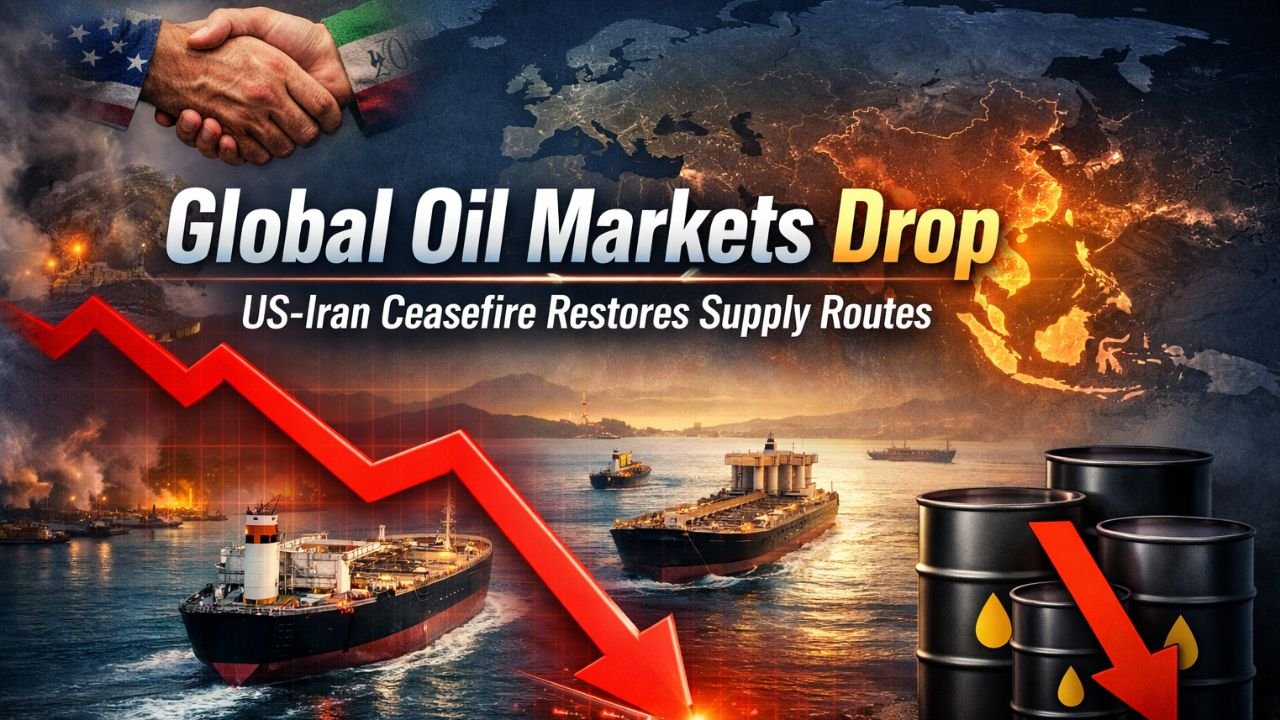
This week, crude oil price drops have also significantly changed the landscape of global energy in the wake of US-Iran diplomatic breakthroughs. The fear of conflict in the Middle East has kept crude oil prices high due to artificial disruption in supply. The geopolitical tension from the US and Iran’s fully comprehensive ceasefire has also provided the first reason to sell oil at a more reasonable price, due to the first significant decrease in price for Brent and WTI crude oil. Furthermore, this ceasefire will also provide a more stable region for oil trading in the Persian Gulf and the Strait of Hormuz, which has also greatly assisted in stabilizing about 20% of the world’s oil trading. Analysts also expect a more fundamentally stable trading environment for global oil prices and a more rational trading environment in light of the US and Iran ceasefire. This is the first time in a significant period without the “fear of price increase” that has kept oil prices inflated to 10-15$ per barrel.
Logistics and the Restoration of the Strait of Hormuz
A significant aspect of the market correction is the establishment of safe corridors for supply delivery that were previously classified as perilous. The reopening of the Strait of Hormuz for safe and unimpeded navigation is of fundamental importance to global shipping and logistics. During the conflict, oil tanker insurance premiums skyrocketed. In addition, shipping companies were forced to either re-route shipping traffic or pay considerable amounts for private security contracts. Now that there is a ceasefire, it is reasonable to expect that the general level of operational expenses will decrease. Consequently, this will reduce the price of crude oil. The elimination of logistical bottlenecks will facilitate the supply of energy to Asia and Europe, especially considering the impending energy crisis for those markets. The shift in traders’ psychology is significant. The move from a wartime situation to peace negotiations is a strong indicator for the market. It is expected that long term hedge funds will be liquidated as confidence in the energy market is sustained.
Price Changes and the Comparative Effect of the Market
The market’s response, as shown in the following tables, is a direct and immediate consequence of the announcement on shipping rates and benchmark prices within the first 48 hours. The data provides a detailed overview of the market reaction in the various subsectors of the energy market.
| Market Benchmark | Pre-Ceasefire Price (Per Barrel) | Post-Ceasefire Price (Per Barrel) | Percentage Change |
| Brent Crude | $88.50 | $76.20 | -13.9% |
| WTI Crude | $84.20 | $71.80 | -14.7% |
| Maritime Insurance | High-Risk Tier | Standard Tier | -40.0% (est.) |
| Natural Gas (EU) | $42.10 | $37.40 | -11.1% |
Increase in Iranian Production and Return of Heavy Crude
With diplomatic relations improving, Iranian oil can start coming back to international markets. Some Iranian oil was already getting smuggled in to the global market, but the end of secondary sanctions allows for the production and export of Iranian oil to happen legally for the first time. This route of oil export gives Iran the ability to ease any oil shortages during global crisis as they have the ability to increase the amount of oil they export. This increase of oil export comes during other OPEC countries are struggling to be consistent with their oil production. Additionally, Iranian heavy crude oil is preferred for making diesel and industrial fuels, which makes it a better oil supply for the refineries in Asia and the Mediterranean.
Consumer Price and Worldwide Inflation Economic Effects
Consumers will mostly feel the direct benefits of the US-Iran ceasefire at the gas stations and the slowing of inflation. High energy costs act as a default tax hitting both consumers and manufacturers and increasing the costs of everything from grocery transport to the production of plastics. Lower and stabilized oil costs may give central banks around the world some room to maneuver and change their policies through adjustable interest rates and thus possibly preventing a wider economic recession. Lower fuel costs will also benefit the airlines and logistic services which have been highly impacted by an unstable jet fuel pricing. Although more competition in the renewable energy sources will be a global priority in the long term, the short term stabilizing of fossil fuel markets will provide some relief to the economies of the developing world.
Long-Term Implications of Geopolitical Stability and Energy Policy
In the case of a ceasefire, the most immediate reactions focus on the price and supply of oil, but a ceasefire also opens the opportunity for a new era of regional collaboration. This event shows a clear shift in what some may see as the ‘dead end’ of conflict and rivalry, toward the more positive point of mutually beneficial economic relations. From the perspective of energy policy, this underscores the value of the ‘elastic’ nature of supply chains. It further enhances the value of diplomacy to ‘soften’ supply and demand imbalances in markets. However, the shift resulting in price drops creates challenges for US shale regions and/or Arctic drilling high-cost production areas, whose economic viability may become very difficult depending on the price staying at or below certain breakeven price thresholds. It will be left to be seen if the global market will demand the new ceasefire’s terms to be carried out to the letter, as global markets will continue to be highly volatile in the absence of what they witnessed in the last decade from new friction of geopolitical friction. For the present, the world is granted the energ y security of a new historical provided by a new era in diplomacy.
FAQs
Q1 What will happen to price of gas in this context?
Due to differences in price determination and price etiquette, retail pricing of gas has a “going to market” delay of approximately 1 – 2 weeks, resulting in consumers experiencing a short term, but gradual increase in retail gas pricing and subsequently, pricing jump at the gas station.
Q2 Does this mean the Iranian oil is now completely legal to purchase?
As part of the initial ceasefire, international buyers are given the opportunity to engage in legal trade with Iranian energy entities, in addition to the gradual lifting of sanctions as part of the cessation of hostilities.
Q3 What about the transition to renewable energy?
While lower oil prices might slow the uptake of EVs as petrol becomes cheaper, many governments are pushing on with their long-term transition goals through other policy incentives and a carbon tax.