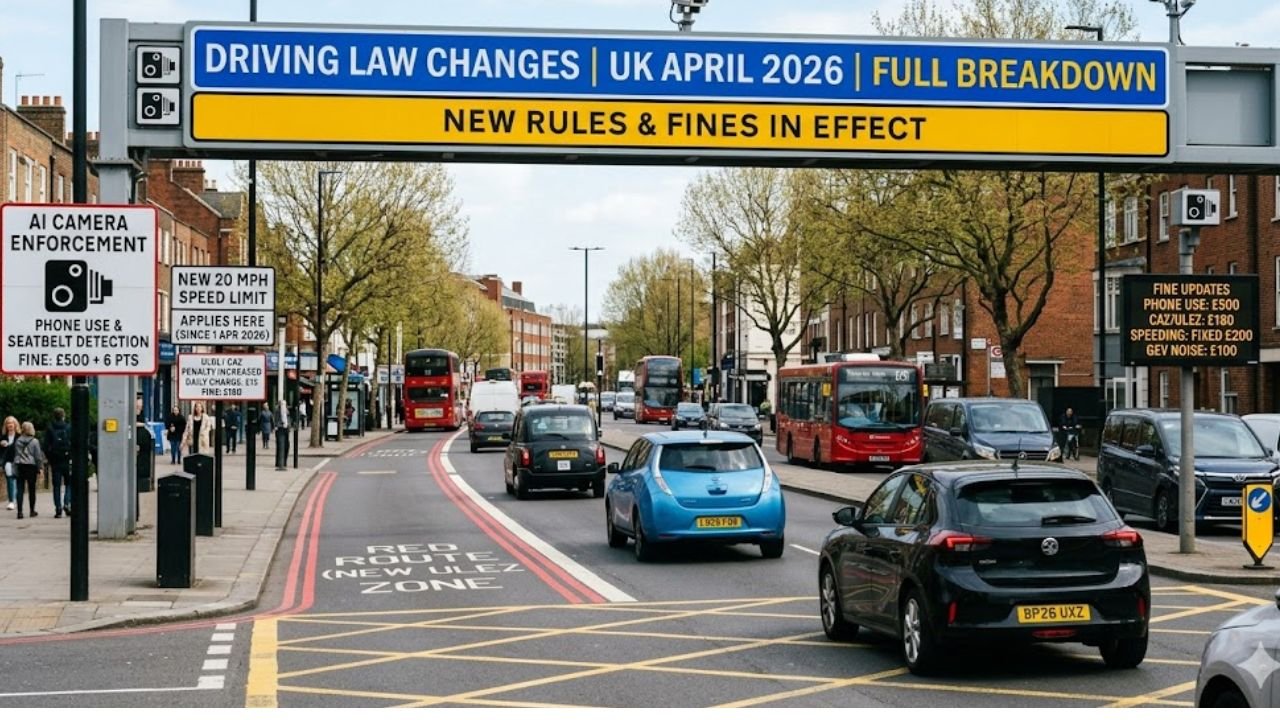
The British motoring landscape is undergoing its most significant transformation in over a decade. As of April 2026, the Department for Transport (DfT) has implemented a sweeping array of regulations designed to modernize road safety and align taxation with the nation’s burgeoning electric vehicle (EV) fleet. These updates are not merely incremental; they represent a fundamental shift in how we approach driver responsibility, vehicle maintenance, and the financial cost of being on the road. For the millions of motorists across England, Scotland, and Wales, staying compliant now requires a deeper understanding of new “zero-tolerance” policies and a complete recalibration of what constitutes a “luxury” vehicle in the eyes of the taxman.
Enhanced Safety Mandates and Stricter Penalty Frameworks
Central to the 2026 reforms is the government’s ambitious “Safe System” strategy, which aims to reduce road fatalities by 65% by 2035. One of the most controversial yet impactful changes involves the tightening of drink-driving thresholds. Following the successful model seen in Scotland, England and Wales have moved toward a lower legal limit, reducing the threshold from 80mg to 50mg of alcohol per 100ml of blood. This “one-drink” reality means many motorists who previously felt safe driving after a single pint or glass of wine may now find themselves facing a minimum 12-month ban. Furthermore, the DVSA has introduced tougher penalties for seatbelt infractions. Previously a fine-only offense, failing to wear a seatbelt—or allowing a passenger to go unbuckled—can now result in three penalty points on your license alongside a fine of up to £500.
The 2026 EV Tax Shift and Luxury Supplement Changes
For several years, electric vehicle owners enjoyed a “honeymoon period” of zero road tax, but that era has officially ended. From April 2026, all zero-emission vehicles are integrated into the standard Vehicle Excise Duty (VED) system. However, the government has introduced a crucial olive branch for middle-income families: the “Expensive Car Supplement” threshold for EVs has been raised. While petrol and diesel cars over £40,000 are still hit with a luxury surcharge, the threshold for electric cars has been increased to £50,000 to account for the higher manufacturing costs of battery technology. This means popular family models like the Tesla Model Y or the Volkswagen ID.4 may now avoid the hefty £440 annual supplement that would have applied under previous rules.
Key Financial Changes for UK Drivers (April 2026)
| Regulation Category | Previous Rule/Rate | New Rule/Rate (April 2026) |
| Standard VED (Road Tax) | £190 – £195 per annum | £200 per annum (Standard Rate) |
| EV Luxury Threshold | £40,000 List Price | £50,000 List Price |
| Drink-Drive Limit (E&W) | 80mg per 100ml blood | 50mg per 100ml blood |
| Seatbelt Offenses | Fine Only | £500 Fine + 3 Penalty Points |
| Congestion Charge (London) | £15 per day | £18 per day |
| EV Congestion Discount | 100% (Free) | 25% – 50% (Partial Discount) |
New Standards for Older Drivers and Learner Booking Rules
Road safety in 2026 also places a sharper lens on driver fitness and the integrity of the licensing system. Motorists aged 70 and over are now subject to mandatory eyesight checks every three years upon license renewal, moving away from the previous “self-declaration” model. This change is bolstered by new police powers allowing for immediate roadside license revocations for any driver who fails a basic vision test. Simultaneously, the DVSA has overhauled the driving test booking system to combat the “black market” of test cancellations. Learners are now restricted to just two changes per booking, and instructors are no longer permitted to book tests on behalf of students. These measures are designed to ensure that only those truly “ready to pass” are taking up valuable examination slots.
Autonomous Technology and Future-Proofing the Highway Code
Perhaps the most futuristic element of the April 2026 update is the formal integration of self-driving vehicle regulations. For the first time, specific “User-in-Charge” legal frameworks have been added to the Highway Code, clarifying liability when a vehicle is operating in a self-driving mode. While full Level 5 autonomy remains a rarity, many 2026 model vehicles now come equipped with mandated safety tech, such as Advanced Emergency Braking (AEB) and Intelligent Speed Assistance (ISA). These systems are no longer optional extras but are required by law for all new registrations. As the UK moves toward its 2030 and 2035 environmental targets, these 2026 adjustments serve as the essential bridge between traditional driving and a highly regulated, automated, and electrified future.
FAQs
Q3 Do I have to pay road tax for my electric car now?
Yes. From April 2025/2026, all electric vehicles are liable for Vehicle Excise Duty. Most will pay the standard rate of £200 per year, though new EVs registered after April 2025 pay a lower introductory rate of £10 for the first year.
Q2 How does the new “Luxury Tax” threshold affect my car purchase?
If you are buying an electric car with a list price between £40,000 and £50,000, you will save roughly £440 per year in supplements compared to the previous rules. Petrol and diesel cars do not benefit from this threshold increase and remain capped at £40,000.
Q3 Can I still move my driving test date if I’m not ready?
Under the new DVSA rules, you can only change your driving test date, time, or location a maximum of two times. If you need to change it a third time, you will likely have to cancel the appointment and pay for a new booking.