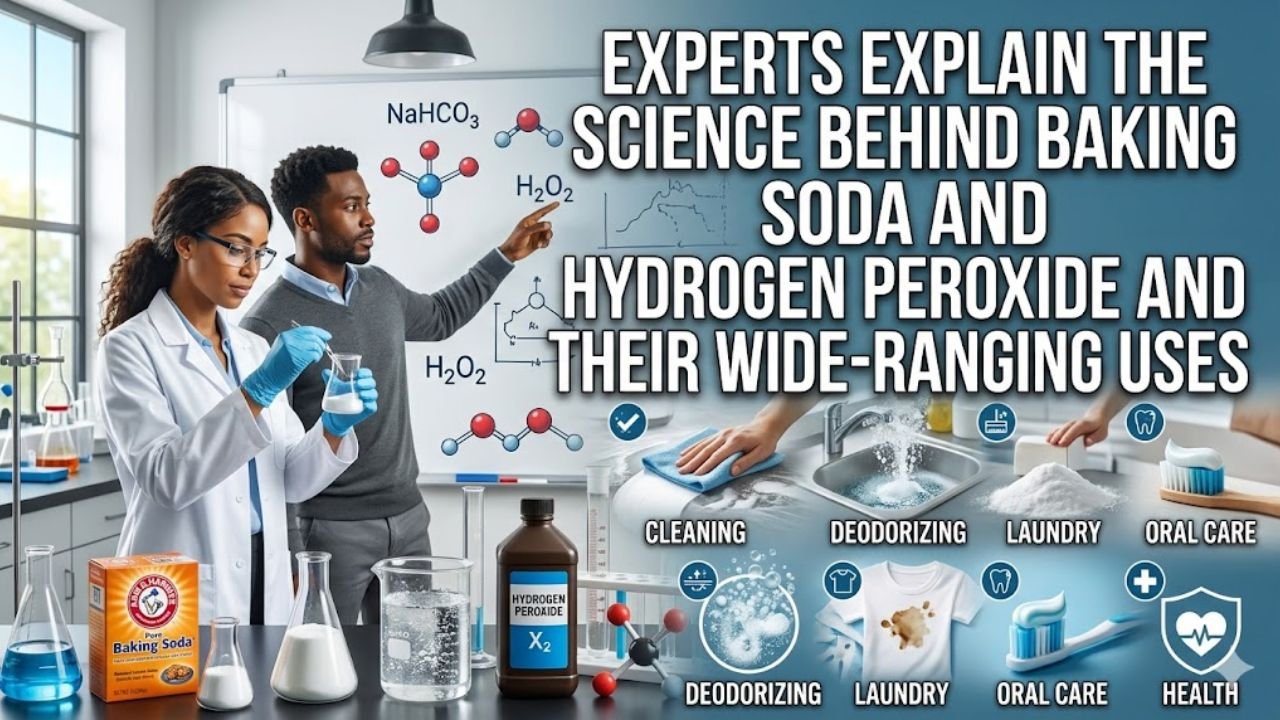
When you think of baking soda and hydrogen peroxide using a little bit of chemistry in the home and doing something useful, it represents the area where the two meet most clearly. When you look at this from a molecule point of view, these two things are different from each other in the most complementary ways. Baking soda, which is a mild alkali, having a crystalline structure that makes it act as a gentle abrasive and a pH buffer. But hydrogen peroxide is the opposite. It is a strong oxidizer because of the Oxygen-Oxygen single bond. When the two are combined, it enters a whole new realm of chemical interactions in which it is said that the presence of one of the reactants enhances the effect of the other. The baking soda is alkaline and helps to stabilize the peroxide, and the peroxide helps to oxidize and break down organic stains. The two are able to complement each other so well that they are over a century old and available for use in homes and laboratories as a non-toxic substitute of the modern day industrial cleaners.
Reaction Mechanisms and the Science of Oxidation
One of the most useful tools a chemist can have is a thorough and detailed understanding of the field of oxidation. Take, for example, hydrogen peroxide (H$_2$O$2$). It is a molecule very similar to water that has an extra, probably rebellious, oxygen atom attached. In the presence of a catalyst or specific pH environments, the peroxide will produce free radicals and reactive oxygen species. These radicals and species are very effective at breaking the molecular bonds of chromophores (the part of a molecule that is responsible for color). This phenomenon is the reason the reaction works so well at whitening teeth and removing wine stains. The baking soda (NaHCO$3$) facilitates the reaction described above by providing the proper environment for the peroxide to work without decomposing too quickly. In addition, the reaction between the baking soda and the peroxide serves to neutralize or deodorize the surface (the baking soda, for example, is an acid). This is a real, honest to goodness, peak to bowl deodorizing. It is a reaction to the molecular scents as opposed to the other common options that employ a cheap artificial fragrance.
Diverse Uses in Health and Hygiene
For oral care, hydrogen peroxide is most commonly used alongside baking soda. A mixture of the two was cited in publications by dentists as an effective stain remover from the tooth enamel. Coarse baking soda works as an abrasive in the enamel and the peroxide lifts and remove deep seated discolored patches through external oxidation. Drawing from many of today’s dental professionals, caution is still advised. Peroxide leads to oxidation of tissues and though this may be of a benefit to the gingiva by killing bacteria, it could equally be a source of irritation as a toothed sore. A mixture of the two is also common in the treatment of minor wounds and in the case of peroxide, paralysis accelerates the healing of to the cut tissue of the skin, due to the continued presence of the peroxide. The reaction of a substance to change is the essence of E-E-A-T, but a reaction of a chemical is not an excuse to ignore the biological component, and should not be.
Comparison of Effectiveness and Safety
It is also important to analyze how common disinfecting and cleaning agents compare to one another. While baking soda and peroxide mixtures are of undeniable use for organic stains and deodorization, they are also aimed at cleansing with a specified purpose. In comparison to chlorine bleach, which is certainly corrosive and possesses a high degree of toxicity with its fumes, baking soda and peroxide reactions result in water, oxygen, and benign salt. This also means baking soda and peroxide mixtures are safer for use in homes with children and pets. The following table compares these two chemicals with other household reagents in terms of usefulness, safety, and primary purpose.
| Substance Combination | Primary Action | Safety Profile | Best Used For |
| Baking Soda + Peroxide | Oxidation & Abrasion | High (Non-toxic) | Organic stains, whitening, odors |
| Vinegar + Baking Soda | Acid-Base Reaction | High (Safe) | Clog removal, fizzing action |
| Bleach + Water | Disinfection | Low (Corrosive) | Killing pathogens on hard surfaces |
| Peroxide + Vinegar | Peracetic Acid Formation | Very Low (Harmful) | Do Not Mix (Irritating vapors) |
Industrial and Environmental Impact
These substances can be used outside of the home, particularly in industrial environments. For example, in the field of environmental remediation, hydrogen peroxide is commonly used in the treatment of wastewater to oxidize pollutants. Meanwhile, baking soda is used in industry to ‘scrub’ acidic gases from smokestacks. This method of treatment is similar to the home use of baking soda and hydrogen peroxide, one component neutralizes the acidity while the other oxidizes complex organic matter. For an environmentally friendly option, this combination is ideal. Best of all, from an environmental standpoint, they are ‘green’ because they break down to naturally occuring substances, do not contribute to the bioaccumulation of toxic substances and are eliminated from the water supply. Therefore they are an excellent choice for an eco-conscious consumer and perfectly align with the modern-day focus on sustainability, while also providing effective cleaning and personal care products. These products have withstood the test of time because of the solid, dependable chemical principles and the reliability that come with them.
Best Practices for Safe Handling and Storage
When experts handle chemicals, including common household chemicals, stability is an important concept. An example is hydrogen peroxide, which is sensitive to light. This is why it is usually sold in opaque brown containers. When hydrogen peroxide is mixed with baking soda, it is better to use the paste immediately. Because of the paste’s ability to produce oxygen gas, sealing the paste in a container and keeping it for later use is an enormous safety risk. This is because oxygen gas will increase the internal pressure of the container causing the container to rupture or explode. Professionals suggest for the best results when using the paste to mix a fresh batch for each use, and to use a peroxide that is less than a year old. By using good judgement with oxygen and carbonates, people are able to use the important, basic, and safe chemicals people know and use, and demonstrate that the chemical solutions to safe and simple problems are highly sophisticated.
FAQs
Q1 If baking soda and hydrogen peroxide are mixed, is it safe to use on skin?
If you are bold, go ahead and use for the occasional treatment of an acne or fungal lesion. However the mixture is quite drying. Consult with a dermatologist, and use caution, as the pH of the baking soda will increase the disturbance in the acid mantle of the skin.
Q2 The mixture bubbles when it is poured out. What is the reason?
The hydrogen peroxide is breaking apart to form water and oxygen gas is the cause of the bubbling. This bubbling action, which is called ‘effervescence’, aids in mechanically dislodging dirt and debris, even in tough spots like tile grout or within fabric fibers.
Q3 Can I store a premade paste of these two ingredients?
No, you should never store them in an airtight container. The reaction produces oxygen gas and builds up pressure which may cause the bottle to explode. Always mix a fresh batch and discard any remaining paste.