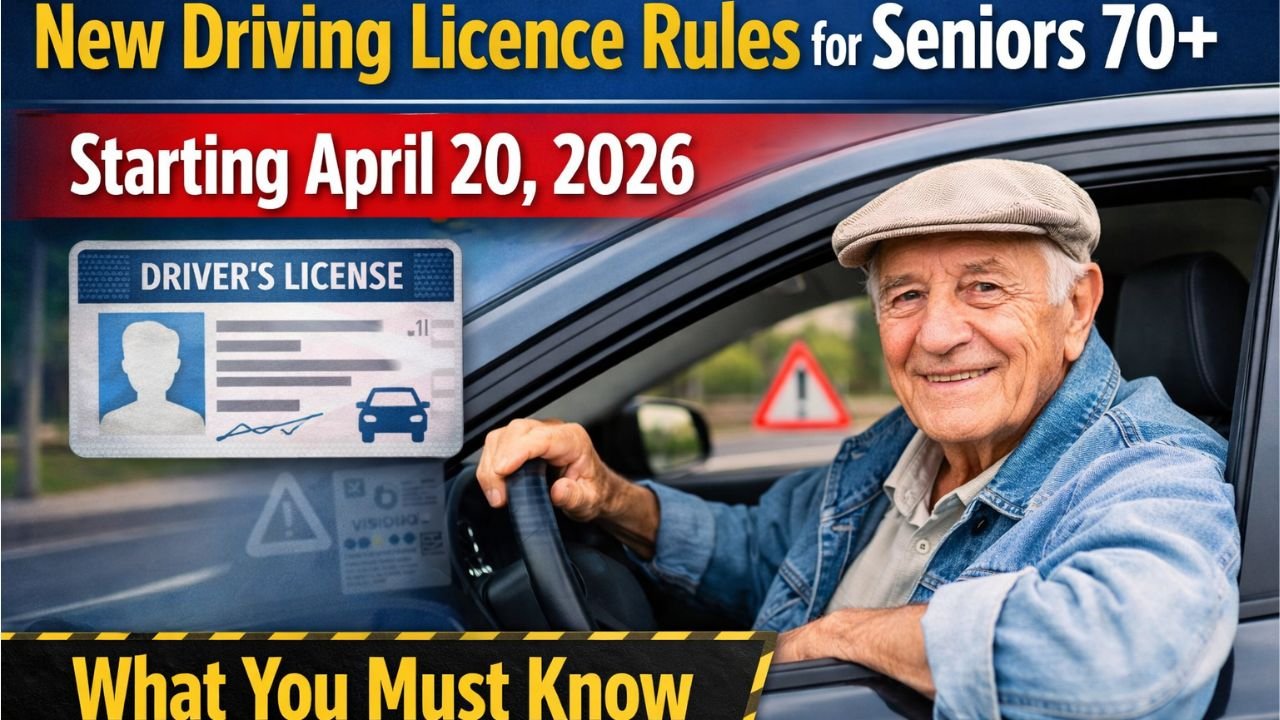
April 20, 2026, brings new changes for road safety policies for driver’s 70 and over. Until now, how drivers lost their license was based on self-reporting. With many accidents happening due to road safety issues, drivers need to renew their licenses every few years. With this system, they will be able to keep their licenses and stay self-sufficient, but they will also stay safe and keep other drivers safe as they enter more busy and complex road systems. With these changes, many drivers will be able to drive without fear of their safety or losing their license due to self-reporting changes.
The most important and prominent changes will be coming this April. Instead of drivers self reporting every 3 years, 70-year-old and older drivers will now be required to report and confirm their fitness to drive every 3 years. 2026 will bring more self reporting requirements as well as the required reporting now with new rules for reporting. New age requirements for reporting will also have to be met with other self reporting requirements of the DVLA. From now on, age restrictions and reporting also will be added new questions regarding reflexes, awareness, and self reporting to the required reporting questions.
Important Dates and Requirements for Renewals
The 2026 updates changes the structure once again to add another layer of complexity to the renewals. For the 70 and over renewals, the cycle stays the same every 3 years. However, the application and documentation requirements have changed. Below is a table with all of the new requirements and the documentation needed to meet the guidelines.
| Requirement | Old System (Pre-2026) | New System (Post-April 20, 2026) |
|---|---|---|
| Renewal Frequency | Every 3 Years | Every 3 Years |
| Eyesight Check | Self-declaration of 20m vision | Possible confirmed eye test professional results |
| Medical Declaration | Basci health tick-box | Comprehensive health questionnaire & GP coverage |
| Application Window | 90 days before expiry | 90 days before expiry (Digital First) |
| Processing Fee | Free (Standard) | Free (Standard, fees apply for C1/D1) |
The longer you wait to comply with the new guidelines, the more ‘license lapses’ you will incur. One of the most crucial parts of an expired license is the fact that you can not drive with an expired license, which means you are forfieting your motor insurance. The DVLA has been updated to a more modern Digital First System that is integrated at some NHS health checks.
Supporting Independence with Safety First
A lot of seniors worry these new rules mean a “driving ban” is coming for older people. For example, there is no upper age limit for driving in the UK. The 2026 changes are age neutral, and most people will find these changes comforting. They will be able to do new mandatory eye tests and some will be able to do driving health tests. People can be sure they are not endangering other people. The 2026 updates will help people as there will be new restricted licenses. These will let people drive to certain areas and in certain times during the day. These new rules will help people preserve their independence as these health changes happen.
The new rules help out GPs a lot too. Starting April 20, GPs are encouraged to talk to their senior patients about driving safety. GPs will direct patients to the DVLA for licensing purposes, but their part is now new in the “fitness to drive” assessments for people with underlying conditions like diabetes or early-stage glaucoma. This is especially important if the patient has a renewal coming up. You can fix these issues before the driving license renewal and help support the case for driving permission.
Keeping Up in a Digital World
As DVLA is focusing more on digital processes, it is even more important for seniors to keep their contact details updated. The paper version of the “D46P” renewal form will still be sent to your registered address, starting 90 days prior to your 70th birthday (and every three years after that). However, the 2026 system will prioritize digital services and paper form submissions will likely mean a longer wait. The online service is also faster, with a new photocard often arriving within 5 working days, as well as providing a digital receipt, which can be shown to insurance companies in case of delays while waiting for the card to arrive by post.
To summarize, even though changes after April 20th 2026 might be intimidating, they are a necessary step for the improvement of road safety. New eyesight tests, medical questionnaires, and digital services will be necessary. For seniors to keep their driving privileges for years to come, it is necessary to be informed about new road digital tools. The transition is more important than it’s ever been and it is very important to start your drive to the DVLA early to avoid added delays once your license is out of date.
FAQs
Q1 If I am 70, do I have to Pay to Renew my Licence?
No. Licence Renewals for 70+ Renewals done through the DVLA website are completely free. However, if you are renewing your permits for larger vehicles or minibuses (C1 or D1 categories), you will have to pay.
Q2 Will I have to redo my driving test after April 20, 2026?
No, new regulations due to age don’t require older seniors to redo their driving test. Instead, new regulations only require seniors to confirm their medical fitness, vision, and eyesight. \
Q3 What is the consequence if I don’t renew my licence before the deadline?
Once your licence expires, you can not legally drive. Continuing to drive can result in a £1,000 fine, and you will be driving with an invalid insurance. You risk being caught and having to pay for the insurance if you don’t renew in the 90-day warning period.