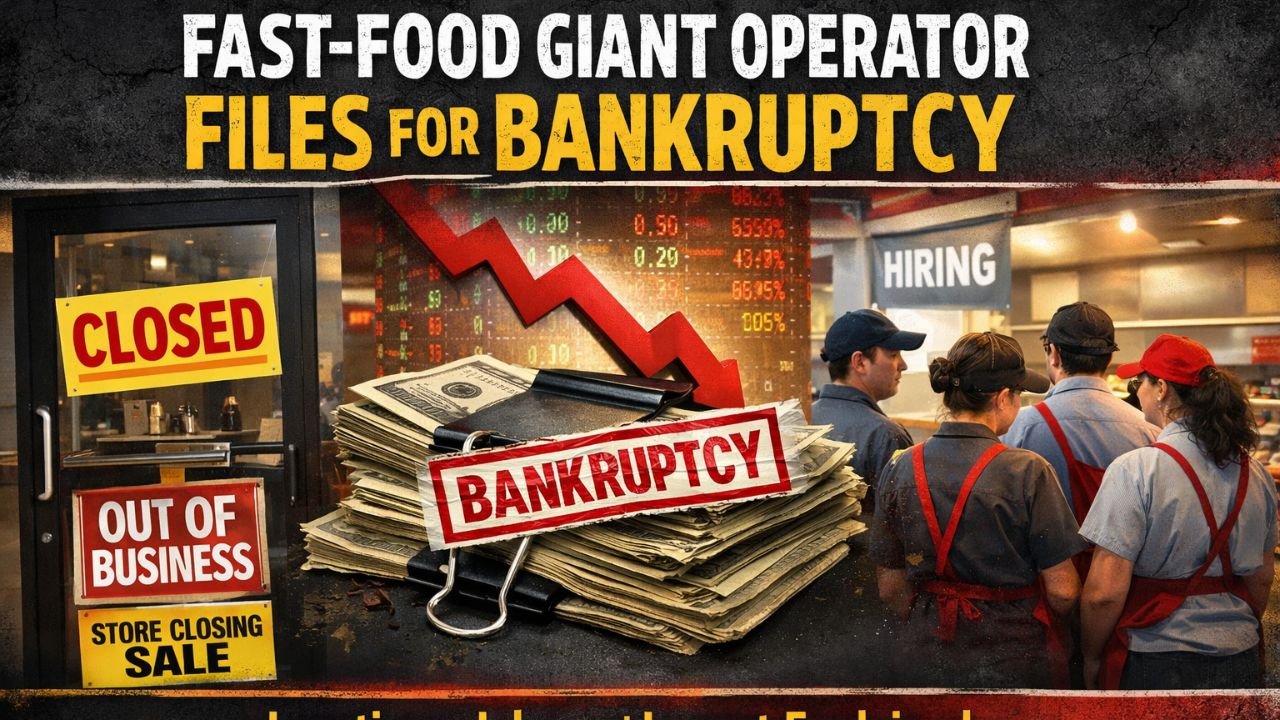
A huge change for American dining is happening in early 2026. Fast-food chains that were once reliable for the American customer have begun filing for bankruptcy. Recently, the Chapter 11 bankruptcy filing for Friendly Franchisees Corporation was the biggest news of the week. They operate 65 Carl’s Jr. locations in California. Founder Harshad Dharod’s claim is a reminder that the economic runaway in the restaurant industry is impacting even historic brands. The parent company of Carl’s Jr. is doing just fine, but the largest franchisee in California is facing a huge financial crisis. This is the growing gap between brand recognition and operational success. This is not an anomaly. Rather it is a symptom of the reset in the fast-food industry. Soaring labor costs, high interest rates, and picky customers are driving a change in the way fast-food drive-thrus operate.
The Economy Behind Franchise Failure
Examining the reasons behind the Friendly Franchisees Corporation’s court-ordered restructuring gives us insight into the complexities of the economy of 2026. Owners of franchises in places like California face several different problems. Minimum wage increases have positively and negatively impacted an area described as the ‘labor-to-revenue’ ratio. In other words, it has become nearly impossible for fast food franchise owners to profit (with a very low margin) without increasing prices (which would cause them to lose their customers). Also, due to interest rates being at record lows for many years, a very large number of franchise owners took on debt as part of their business structures. Now that those loans must be ‘refinanced’ at a very high rate, they are literally trapped in a financial funnel as prices for all of their inputs (cattle, oil, electricity, and labor) negatively and rapidly outdate the value that the average consumer perceives in a ‘premium’ hamburger. The trader’s comment about a ‘squeeze’ has become a reality.
Impact on Locations, Local Economies, and the Workforce
Regular customers and staff members are concerned about whether their local restaurant will disappear. What a Carl’s Jr. restaurants recently going bankrupt. Chapters 11 filins are a type of bankrupt that allows the business to continue operating normally. That said, “restructuring” typically means closing unprofitable locations. This is bad news for employment at these locations, as closing just one can result in 20 to 50 job losses, including positions as part-time cashiers and full-time kitchen managers. Other community members may rely on fast food restaurants for job opportunities, and without them, a community can feel the loss. The below table summarizes the leading operators and franchisees that encountered the same challenges in the first quarter of 2026.
| Operator / Franchisee | Associated Brand | Scope of Impact | Primary Reason for Filing |
| Friendly Franchisees Corp. | Carl’s Jr. | 65 California locations | Labor costs and debt restructuring |
| Neighborhood Restaurant Partners | Applebee’s | 53 SE US locations | Declining sales and failed acquisition |
| Sailormen Inc. | Popeyes | 130+ locations (FL, GA) | Inflation and shifting consumer habits |
| FAT Brands | Multiple (Fatburger, etc.) | Global Portfolio | High debt load and federal inquiries |
| Catalyst Brands | Eddie Bauer / Food Units | National Mall Presence | Reduced foot traffic in retail centers |
Consumer Sentiment and the Fall of Value-Based Dining
The five-dollar meal deal’s “Golden Age” will not return. Operators filing for bankruptcies and citing a “reset” in consumer behavior have been frequent. In 2026, patrons will not be driven to the fast-food restaurants by the same marketing strategies. The target price for a meal deal is a family of four, but how valuable is the meal deal when the competition is a sit down dinner priced the same as the meal deal and served at a bistro? The value proposition is a driving factor to the customers, but they can use social media, and they do not buy for the sake of buying. This is especially true for the Gen Z customers. Businesses positioned in the middle are suffering as a result of this. They need to sell large quantities of low priced meals to succeed. The new trend is to buy meals that are made from quality ingredients and the prices are clear.The current bankruptcy trend is the market’s way of addressing years of aggressive expansion, rising menu prices, and other issues that have finally reached a breaking point.
Fast Food Industry Evolution 2026
The news of bankruptcies is not that big of a deal, experts say it is a sign of the necessary evolution of the industry. Most of the brands that will survive the “Great Reset” will implement a lot of automation and other productivity technologies to control labor costs. There are companies who will end up going to a modeled after “kiosk” style restaurants, without a lot of tables and chairs. Most of the brands going through bankruptcy will return to the market with a streamlined, focused concept. That will most likely include technologically equipped operations, and a smaller number of locations. That will shift the required skills away from customer service roles, and move more to technology management. The industry, over the rest of 2023, will have a lot more work to do to refine their definitions of “fast” and “affordable.”
FAQs
Q1 Will all Carl’s Jr. locations close because of this bankruptcy?
No. The bankruptcy only applies to the Friendly Franchisees Corporation, which runs 65 restaurants in California. The other corporate parent and independent franchisees in the U.S. and 28 other countries are not affected by this and will continue to operate normally.
Q2 What happens to the employees of the affected restaurants?
The intention of Chapter 11 is keeping the company operational while they sort out their debt. Employees continue to work normally unless the company decides to close certain, losing money locations as a part of their reorganization strategy.
Q3 Why are so many fast-food operators struggling right now?
The main causes for 2026 are a mix of extremely increased labor costs (particularly in states like California), high levels of interest on corporate debt, and a consumer ‘value-revolt’ where customers are less inclined to spend money because of high prices on the menu.